
Last updated November 16, 2026
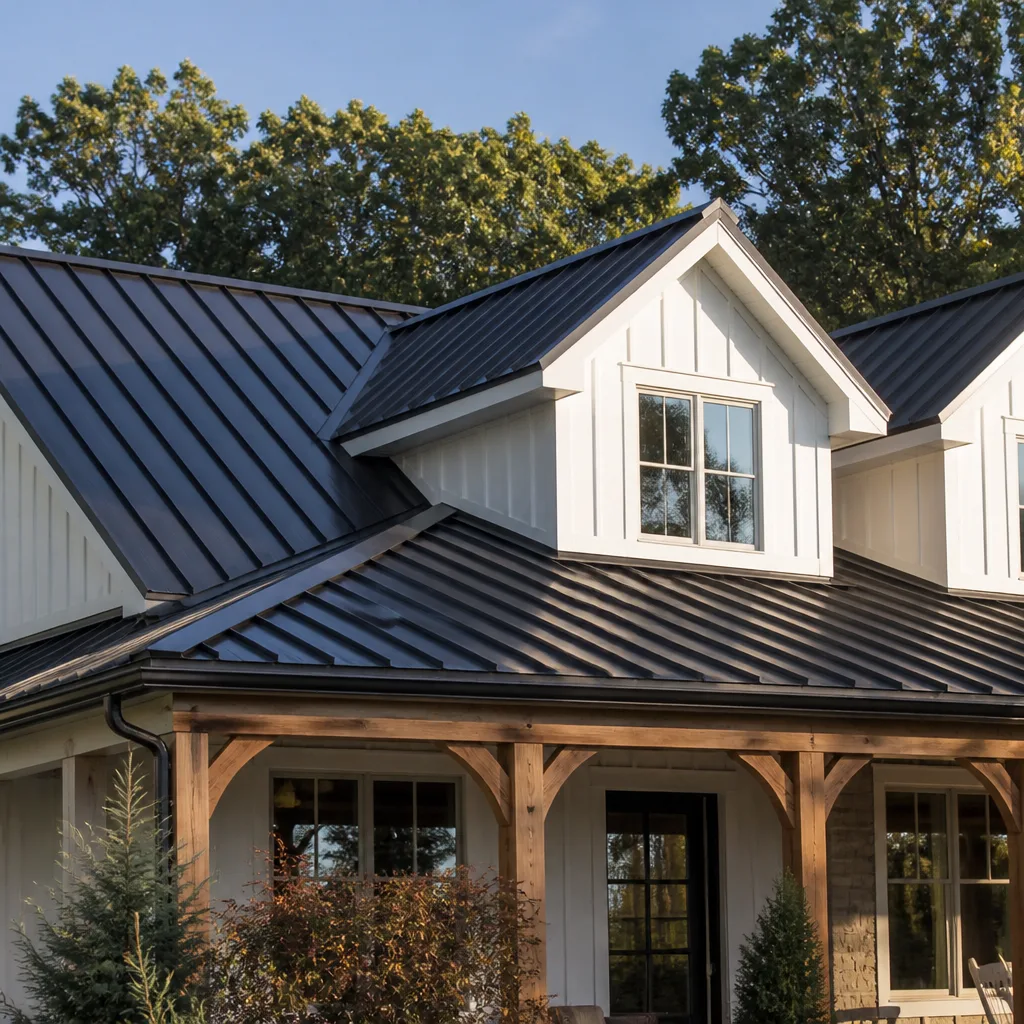 Metal roofing
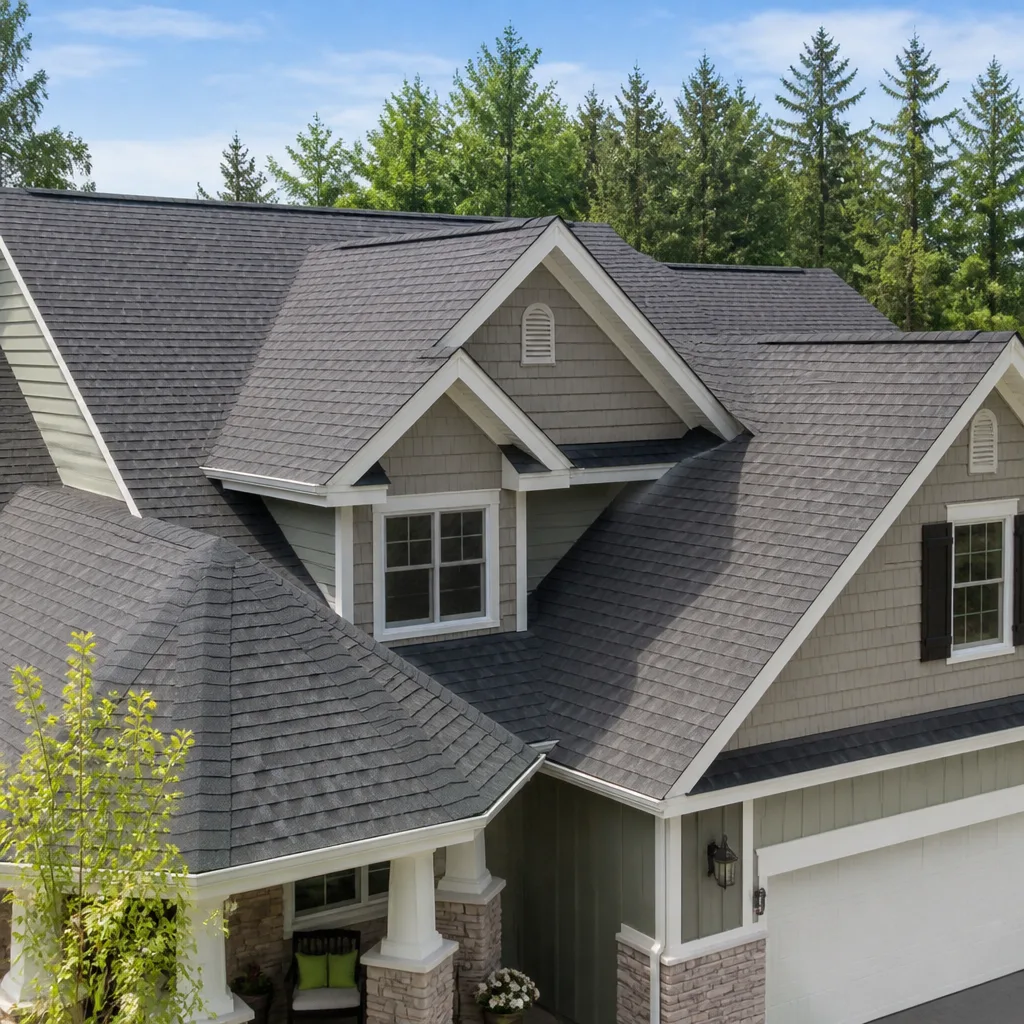 Architectural shingles
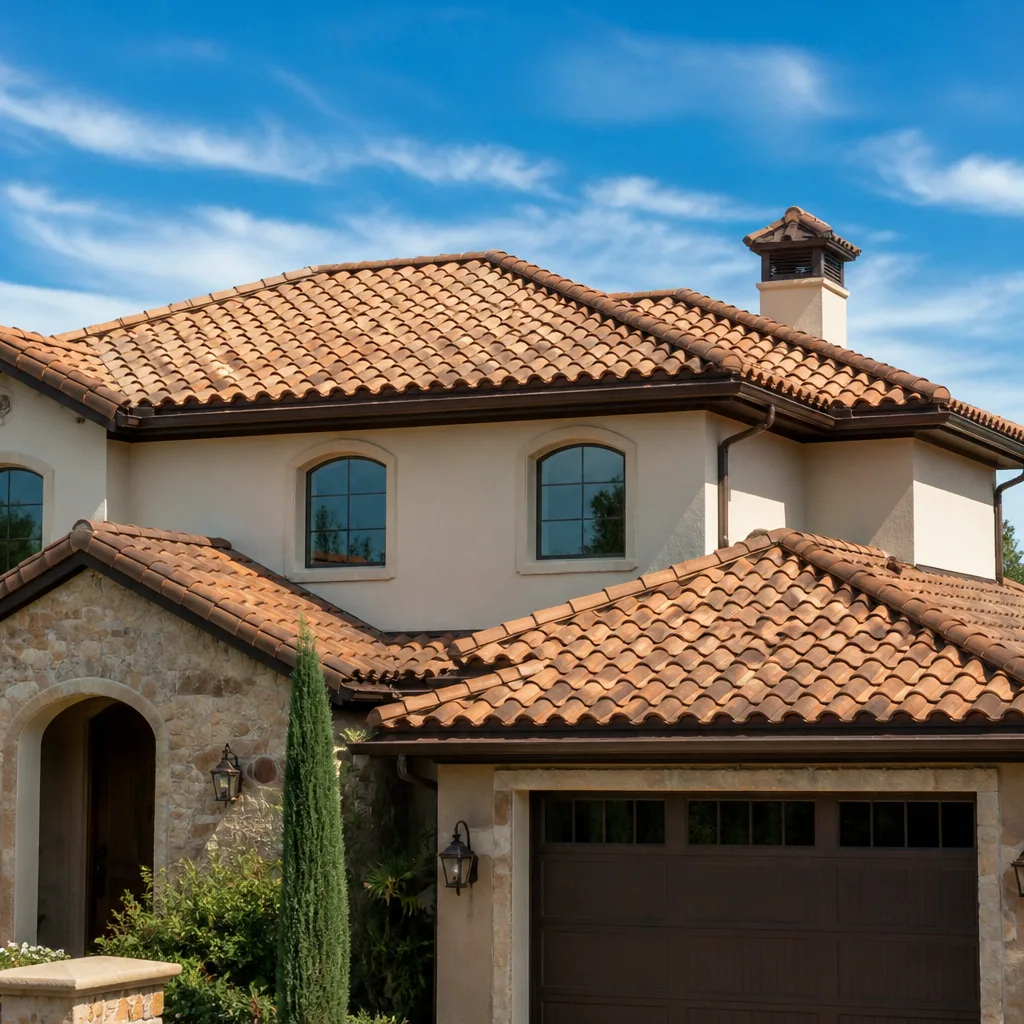 Tile roofing
 GAF
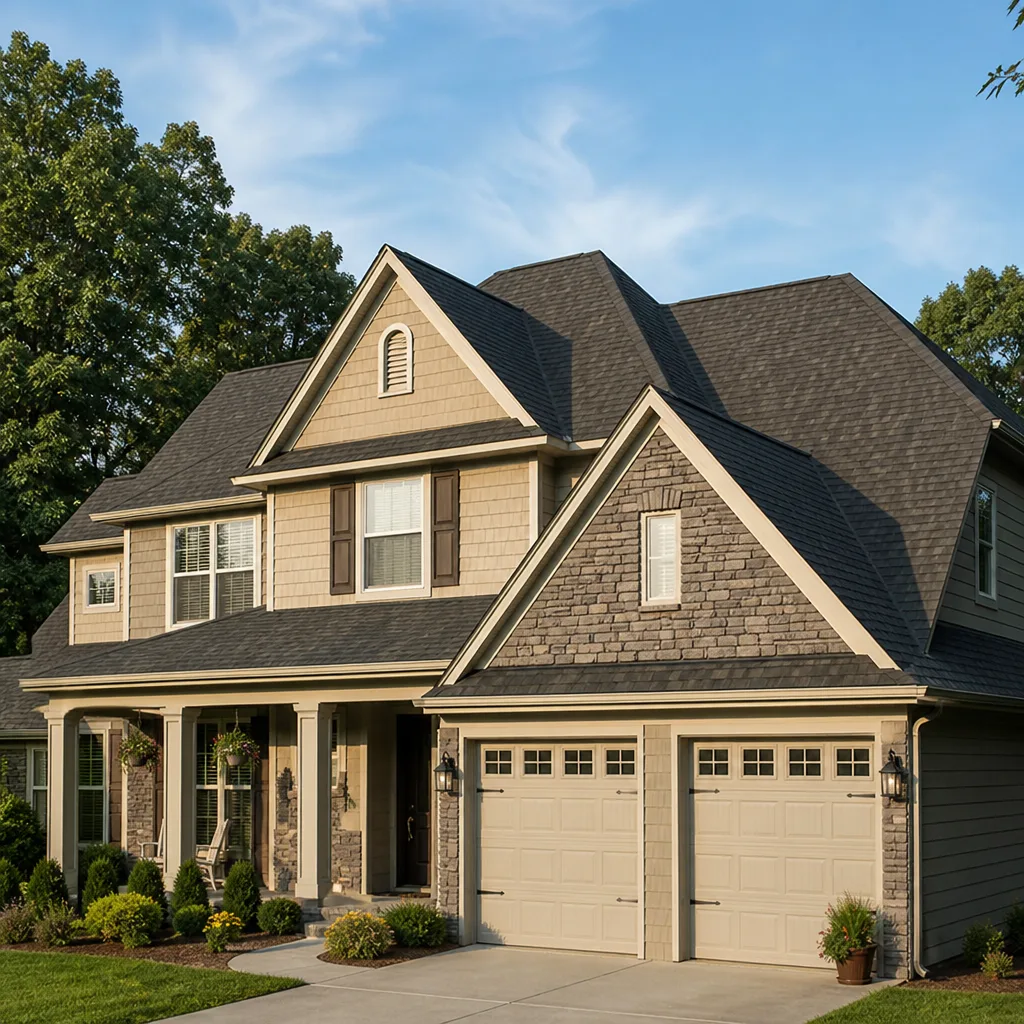 Owens Corning
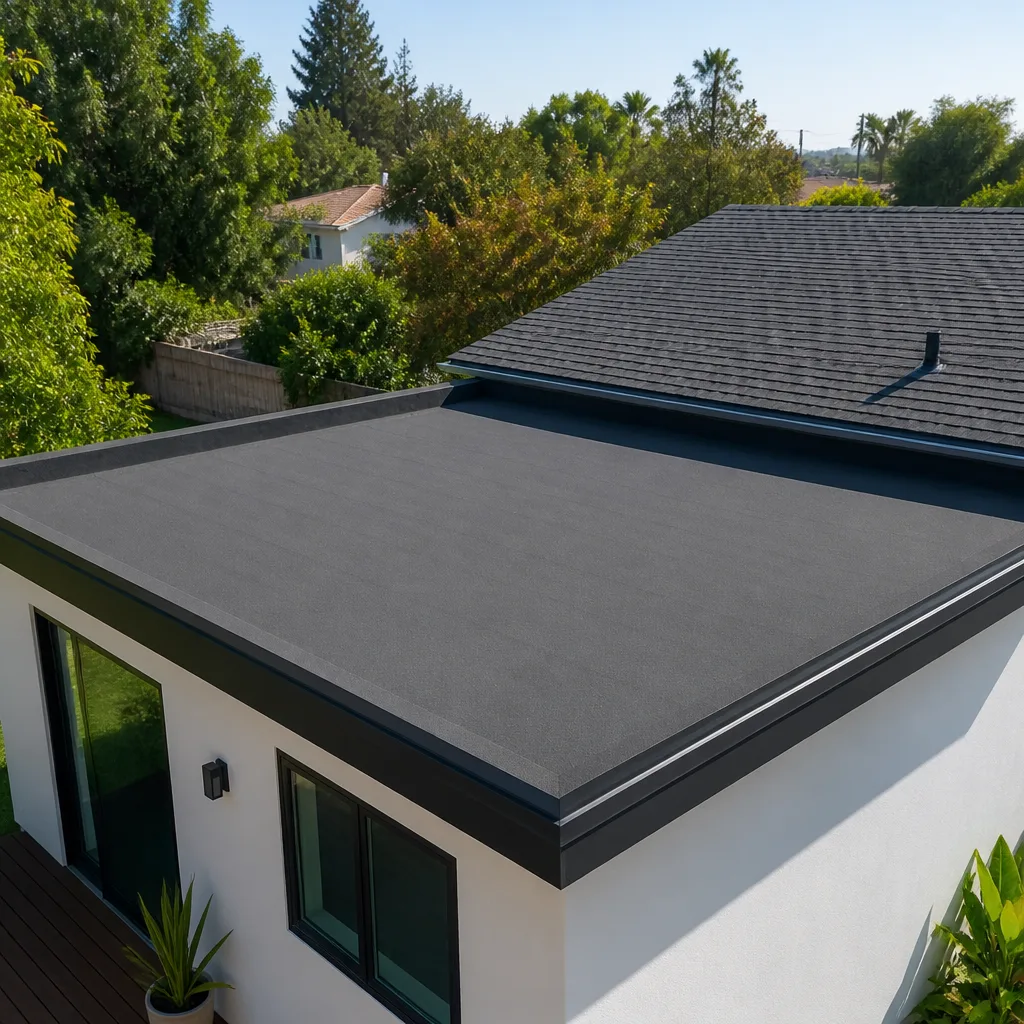 Flat & low-slope
Free roof inspection with deck photos before we talk money - GAF and Owens Corning certified installation
How to Hire a Roofing Contractor in Albany: A Step-by-Step Guide
Most people hire a roofer the same way they hire a plumber: they get a couple of quotes, pick the middle one, and hope. That works for a leaky faucet. It does not work for a roof, which is the one part of your house that spends every winter fighting freeze-thaw cycles and every spring draining meltwater off the Capital Region. Here’s the counterintuitive part. The most persuasive bidder isn’t always the most qualified one. The crew that knocks on your door the week after a storm can talk a better game than the local specialist who has to schedule you two weeks out. This guide gives you a screening process you can verify, from license checks to insurance certificates to reading an estimate line by line, so you’re choosing on evidence rather than salesmanship. We’ll walk through it step by step, with Albany specifics where they matter.
Quick Answer
To hire a roofing contractor in Albany, verify three things before you discuss price: an active New York State contractor registration, current general liability and workers’ compensation insurance certificates, and a physical local business presence you can confirm independently. Then compare written estimates that list the same scope, the same materials, and the same exclusions side by side. A roofer who resists any one of those checks is telling you something useful.
Styles & brands we work with
- Architectural shingles
- Metal roofing
- Tile roofing
- GAF
- Owens Corning
- Flat & low-slope
Key Takeaways
- New York’s registration is a paperwork floor, not a quality seal. It does not prove craftsmanship, and it does not guarantee anyone will stand behind the work.
- Ask for insurance certificates to be sent to you directly by the insurer, not handed over as a photocopy. Expired coverage is the single most common gap we see.
- Manufacturer credentials matter because they can affect warranty eligibility after a full tear-off. Check them at the source.
- An estimate without exclusions is not an estimate. It’s a starting number.
- Local roots are your best warranty. A contractor with a verifiable address in the Capital Region is still around when something goes wrong two winters later.
See the difference
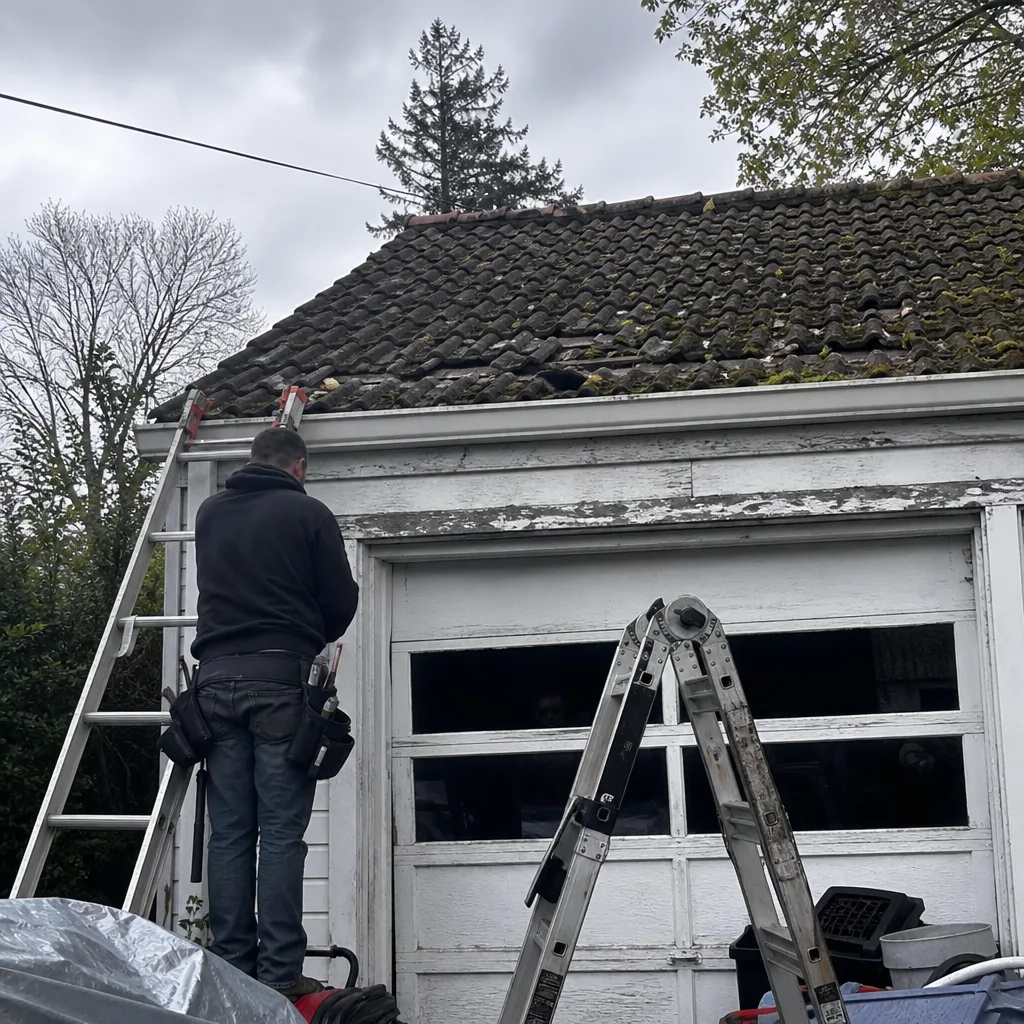 Before
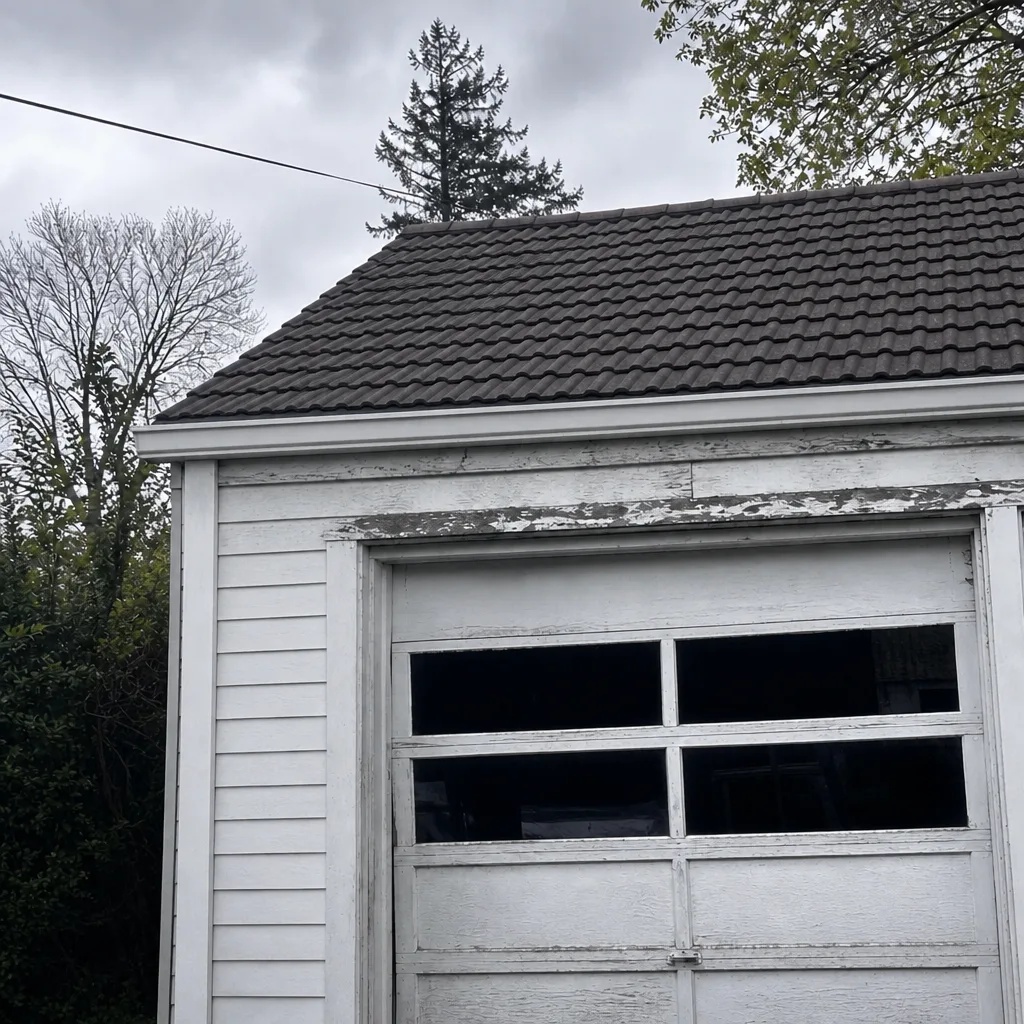 After
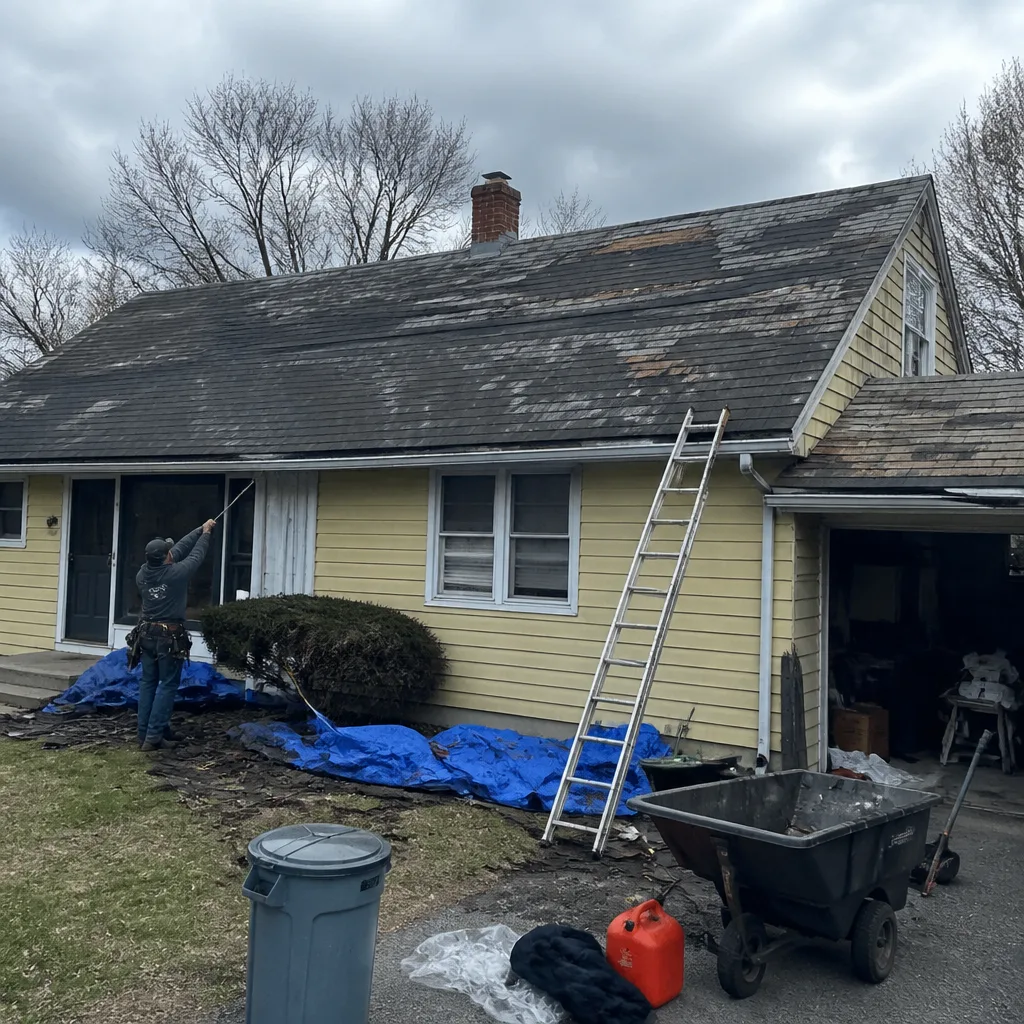 Before
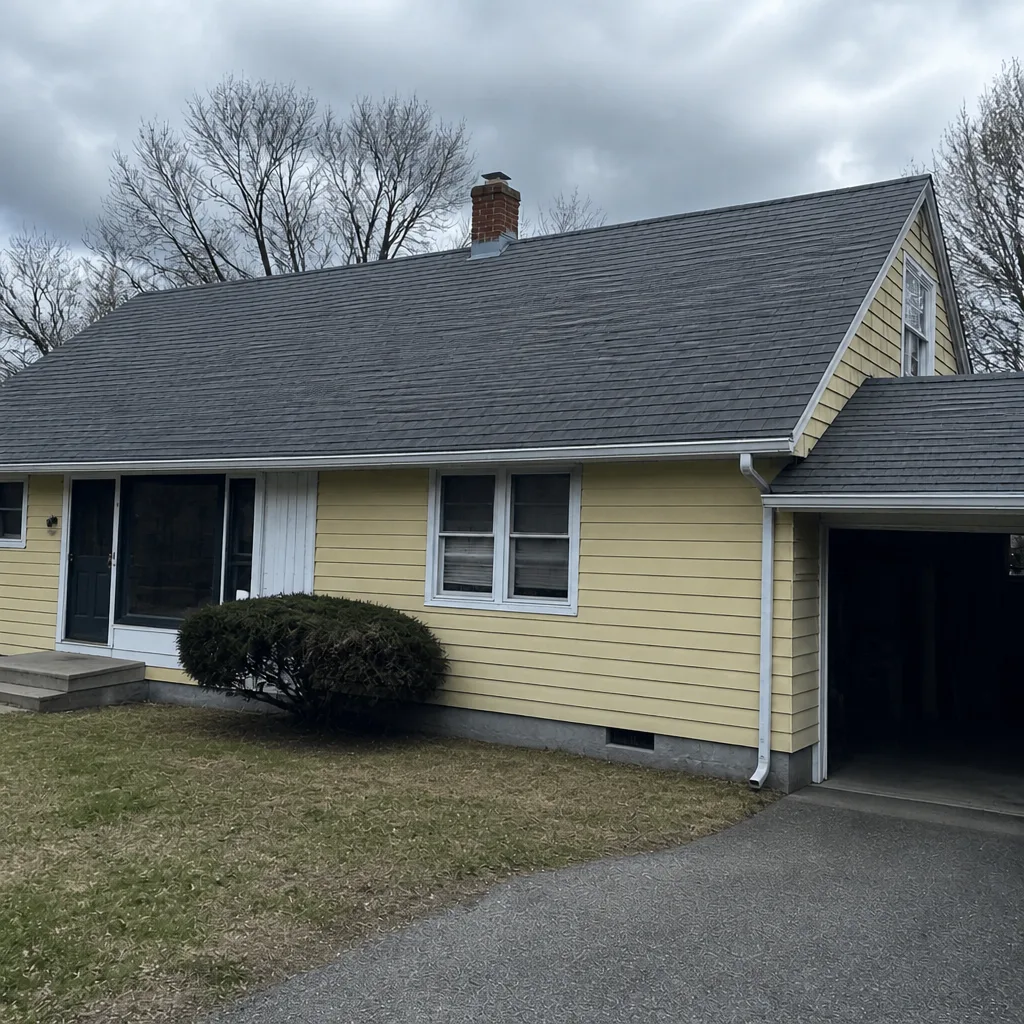 After
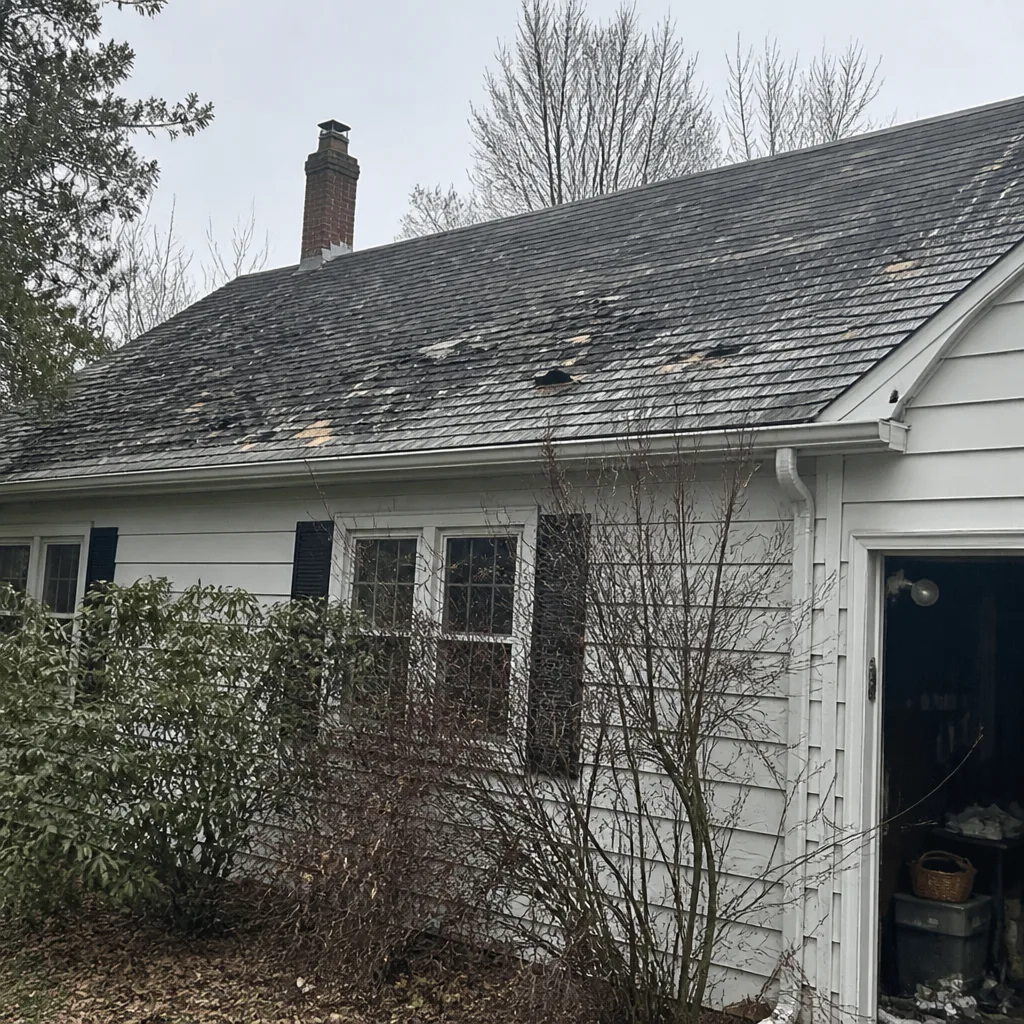 Before
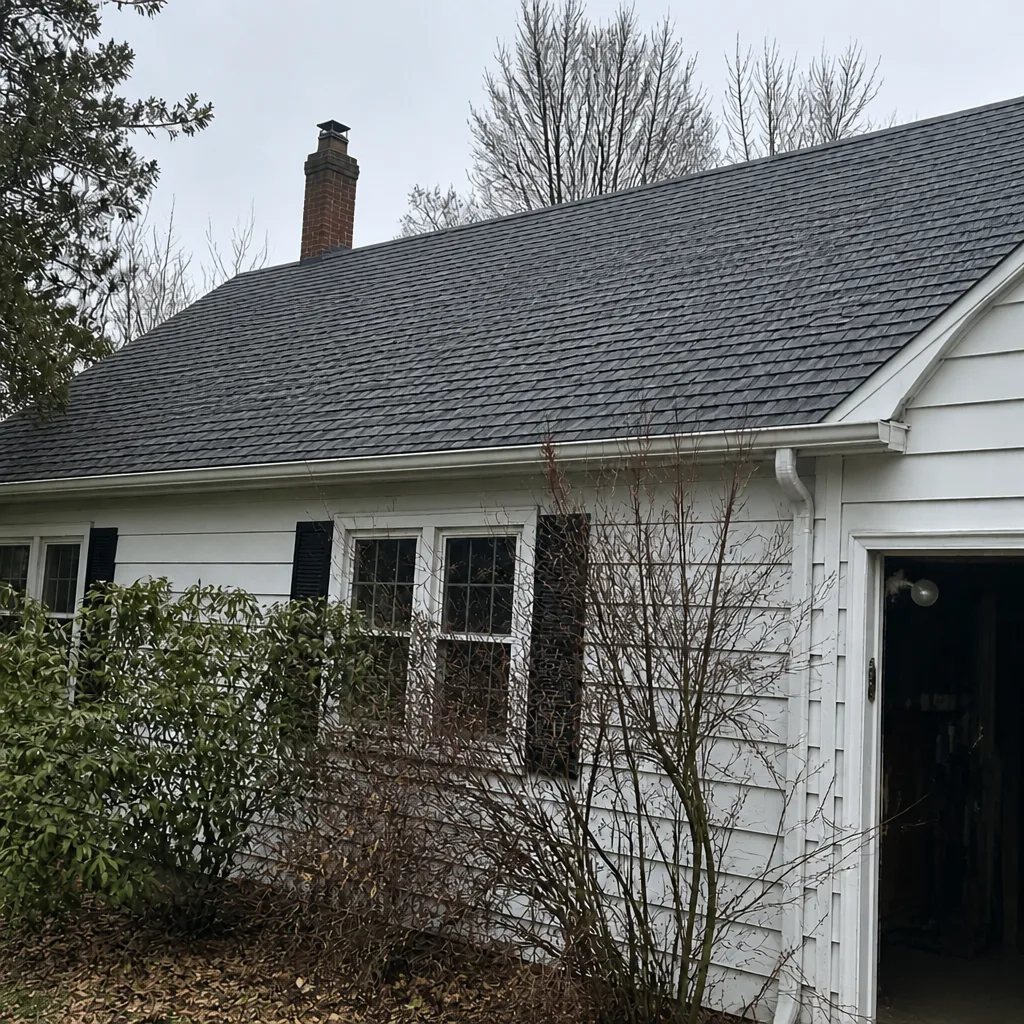 After
Table of Contents
- Step 1: Verify the Contractor’s New York State Registration
- Step 2: Confirm Insurance Is Active, Not Just On File
- Step 3: Check Manufacturer Credentials
- Step 4: Recognize Storm-Chaser Operations
- Step 5: Read the Estimate Like a Roofer
- What Albany’s Climate and Housing Stock Mean for Your Roof
- Step 6: Screen for Red Flags Before You Sign
- Common Mistakes to Avoid
- When to Call a Professional
Step 1: Verify the Contractor’s New York State Registration
New York doesn’t license roofers the way it licenses electricians or plumbers. What the state does require, for most home improvement work including roofing, is that contractors register with the state Department of State’s Division of Consumer Protection under the home improvement contractor law. You can search the registration yourself through the state’s consumer protection portal. Don’t take a photocopy on faith. Look it up.
Now the part most guides skip. What registration actually covers, and what it doesn’t.
It covers the business registration itself, and it gives you a paper trail through a state agency if a dispute goes badly. That’s real value. What it does not cover is craftsmanship, safety training, or whether the crew on your roof knows the difference between proper underlayment and a shortcut. It’s a floor, not a ceiling. A contractor with current registration and a terrible installation record still has current registration.
Albany also has its own local layer. Roofing work that involves structural changes, or full tear-offs in some circumstances, can trigger a building permit from the city. The permit rule isn’t universal, and it depends on the scope and the inspector’s read of your project, so call the city’s building department and ask directly about your address. A contractor who volunteers to pull the permit, rather than asking you to file as the homeowner, is telling you they know the local process. One who says “you don’t need a permit for that” without checking is telling you they don’t.
Ask the contractor two questions at this stage. First, what’s your state registration number, and second, who pulls the permit on jobs like mine? The answers should come without hesitation.
Step 2: Confirm Insurance Is Active, Not Just On File
Every contractor will tell you they’re insured. The relevant question is whether their coverage is active on the day a crew climbs your ladder. Two policies matter, and they cover different things.
- General liability insurance covers damage to your property. If a shingle bundle goes through a window, or a ladder takes out a gutter, this is the policy that responds.
- Workers’ compensation insurance covers the crew if someone is hurt on the job. This matters enormously to you as a homeowner. Without it, an injured worker’s claim can potentially land on your homeowners policy, because the person was injured on your property working for a contractor you hired.
Here’s how to confirm both are live, not lapsed:
- Ask for the certificate of insurance for both general liability and workers’ compensation.
- Look at the effective dates. A certificate that expired last month is a red flag, not a technicality.
- Ask the insurer to email or send you the certificate directly. A certificate the agent transmits is very hard to fake. A photocopy in a bidder’s folder is easy to edit.
- Call the agent listed on the certificate and confirm the policy is still in force and that the limits are what the document shows.
Quality contractors expect this request and answer it without friction. If a roofer seems annoyed that you’re asking, that reaction is your answer. We’ve seen homeowners in neighborhoods like Pine Hills and Buckingham Pond assume a document in a folder means coverage, when the reality was a policy that lapsed months earlier. The phone call to the agent takes ten minutes. It’s the best ten minutes you’ll spend in the whole hiring process.
Step 3: Check Manufacturer Credentials
This step gets skipped constantly, and it’s the one that costs people the most money later. Here’s why it matters. Most asphalt shingle systems come with two warranties: a material warranty from the manufacturer and a workmanship warranty from the contractor. The material warranty in particular is often tied to proper installation by qualified installers, and manufacturers increasingly tie their strongest warranty tiers to credentialed contractors. Install a premium system with someone who isn’t credentialed for it, and you may get a shorter warranty, or find the manufacturer points to installation error rather than product failure when a claim comes in.
So how do you check? Ask the contractor which manufacturers they’re credentialed with, then verify it directly.
- Go to the manufacturer’s own contractor locator or credentialing program page and search the contractor’s name.
- Ask which warranty tier applies to the specific system they’re proposing for your roof, and ask the contractor to show you the warranty documents before you sign, not after.
- Confirm the credentials are current, not lapsed. Programs require renewal.
Multi-brand access matters here too. A roofer who works with only one manufacturer’s product line has an incentive to recommend that line regardless of what your roof actually needs. At Jasper Roof Repair we work with seven recognized manufacturers, including IKO, Atlas, Tamko, and Boral, so the material recommendation follows what fits your house and your budget. A specialist shouldn’t have a single-lane answer. It should have range, and it should show you the reasoning.
Step 4: Recognize Storm-Chaser Operations
After a major freeze event, ice storm, or damaging wind in the Capital Region, out-of-area roofing operations move into Albany quickly. Some do real work. Many don’t, and the ones that don’t have a recognizable playbook. Learn it. It’s not subtle once you know what to look for.
These crews are built around speed and a signature, not around your roof’s long-term condition. They arrive, they sell, they install, and they leave the region before the next season tests the work. When a leak shows up the following spring and you call the number on the invoice, the line is disconnected or the number routes to a call center that can’t help you.
Six red flags to screen for:
- Same-day pressure to sign. A legitimate contractor will want to earn your business. One who says the price is only good today because “the crew is in the neighborhood” is running a sales script. Real bids don’t expire by dinnertime.
- An insurance assignment clause in the paperwork. This is the big one. Some contracts include language that assigns your insurance claim rights to the contractor. Read every line, and if you see assignment language, don’t sign. Ask for it in writing that the clause is removed.
- No verifiable local address. Ask for the physical street address of the business. Look it up. If it’s a PO box, a hotel, or doesn’t match a real office, walk away.
- No local references you can call, or only references from far out of the area. Ask for references within the Capital Region, then actually call them.
- Payment structure that starts too high up front. A deposit is normal. Paying the bulk of the job before materials land on your driveway is not. Milestone-based payment tied to completed work is the standard.
- Oral promises that don’t make it into the contract. “We’ll take care of that for you” means nothing if it isn’t written down and signed by both parties.
If a roofer’s pitch is about timing pressure rather than the physical condition of your roof, you’re not being sold on roofing. You’re being sold on urgency. Those are different trades.
Step 5: Read the Estimate Like a Roofer
Two estimates that read “$14,000” and “$16,500” are not comparable unless the scope matches. A roofing estimate is a scope document that happens to have a price on it. Read it as a scope first. Here’s the structure a complete one should have.
It should list the material system in full: shingle brand and product line, underlayment type, decking repair allowance, ridge ventilation, drip edge, and flashing. It should name the fastener system and ice dam protection specifically, because upstate New York winters are the reason those items exist. It should describe what’s being removed, what’s being installed, and what gets disposed of. And it should have a section labeled exclusions, which is where the real answers live.
Compare bids to the same standard using a simple grid:
- Scope: Same square footage, same line items, same removal and disposal?
- Materials: Are the products actually comparable, or is one bid using a lower-tier shingle while the other uses a premium line? Different lines have very different lifespans.
- Decking allowance: Is there a stated allowance for replacing rotten plywood underneath, or is it “to be determined”? TBD means the price will go up once the old roof comes off, and you’ll have no leverage to question it.
- Ventilation: Is ridge vent, soffit vent, or a combination included? Inadequate attic ventilation shortens roof life, and Albany’s temperature swings make it worse.
- Exclusions: What is explicitly out of scope? This section is the most important part of the document, and it’s the one many bids omit.
- Workmanship warranty: What’s the term, and what does it actually cover? A warranty that excludes the most likely failure points isn’t a warranty. It’s a footnote.
- Permit responsibility: Stated clearly, with the city permitting cost accounted for.
Then ask the question that separates a real estimate from a sales document: “If you find rotten decking, what happens to the price, and how will you tell me before doing the work?” A roofer with a clear answer has done this a thousand times. A roofer who won’t answer, or says “we’ll figure it out,” is telling you the change order conversation has not been planned for.
When the answer is repair rather than replacement, you’ll want the same rigor applied to the smaller scope. Our roof repair process is built around the same estimate structure: specific line items, named materials, written exclusions. If the roof warrants full replacement instead, the roof replacement quote follows the same standard. The document should look the same either way. Only the scope changes.
What Albany’s Climate and Housing Stock Mean for Your Roof
The roof you’re hiring someone to work on isn’t a generic roof. It’s a roof in a specific place, and the place matters. Albany gets real winters: hard freezes, snow load, and the daily freeze-thaw cycles that open seams and stress flashing. That climate puts specific demands on roofing work that a contractor from a warm-weather market may not fully internalize.
What that means for your estimate and your choice:
- Ice dam protection is not optional here. It should be named in the estimate. If a bid omits it, ask why. There is no good answer for a roof in this climate.
- Flashing work deserves close attention. Chimney flashing, step flashing, and valley flashing are the failure points that show up first after a freeze. A bid that treats flashing as a generic line item is underselling the work.
- Attic ventilation affects snow melt. Poor ventilation contributes to uneven melting and ice dam formation. A roofer who doesn’t ask about your attic during the inspection is missing half the picture.
- Older housing stock varies widely. Roofs across Albany neighborhoods differ substantially in age, pitch, and decking condition. A contractor who inspected the roof before quoting will know which of those applies to yours. One who quoted from the curb won’t.
This is why we put a roof inspection in front of both repair and replacement. A real diagnosis costs you nothing extra when you book an Albany roof inspection with us, and it means the materials and scope match the actual roof. Our technicians have up to 15 years of experience with roofs built for this climate, and the multi-brand access across seven manufacturers means the recommendation fits the roof, not the inventory.
Step 6: Screen for Red Flags Before You Sign
You’ve verified the registration, confirmed the insurance, checked the credentials, and read the estimate. One more pass. Sign only after you’ve cleared these final screen points.
- The scope matches and the exclusions are written. Every item you care about is on the paper. Nothing important lives in a verbal promise.
- Payment is milestone-based and documented. Deposits are normal. The schedule is in the contract.
- Permit handling is stated, and the contractor is handling it where required. Ask the city directly if the answer is uncertain.
- Workmanship warranty is written, named, and defined. “Lifetime warranty” without definitions means nothing. Ask what’s covered and for how long.
- The contract has a three-day right to cancel and you’ve read it. Most home improvement contracts in New York give you a three-day right to cancel. Read that section carefully. A legitimate contractor will not pressure you to waive it.
- You can picture who to call if something goes wrong in year three. If you can’t, the warranty is theoretical. A roofing specialist with a verifiable local presence, and who only does roofing, is the version of this where the phone still gets answered after the ice storm is a distant memory.
That last point is the reason we focus only on roofs. When a company’s entire practice is roof repair and replacement, there’s no other trade competing for attention. When something goes wrong on a roof, the person who picks up the phone is a roofer.
Common Mistakes to Avoid
- Picking on price alone. The cheapest bid is often cheap because the scope is thin: no flashing detail, no ice dam protection, no decking allowance. Compare scope first, price second. Two radically different totals usually mean two different jobs.
- Skipping the insurance verification call. A certificate in a folder is not proof of coverage. Call the insurer and confirm the policy is active today. This takes minutes and can save you a world of trouble if a worker is injured on your property.
- Believing a license number that doesn’t exist. New York registers home improvement contractors; it doesn’t license them in the sense most people assume. Search the state’s consumer protection portal yourself, and if the number doesn’t verify, that’s your answer.
- Letting an insurance assignment clause through. Read the fine print. If a contract hands your claim rights to the contractor, remove the clause or don’t sign. This is the single costliest mistake in the storm-damage category.
- Hiring a crew that appeared after a storm and will leave before the warranty is tested. Ask for a verifiable local address, local references, and a workmanship warranty you can read. If all three are fuzzy, the operation is likely built to move on.
- Accepting a verbal estimate for a substantial job. The written scope and exclusions are the contract. Without them, every conversation about the work defaults to whoever remembers it differently.
- Skipping the roof inspection before committing to a full replacement. Every roof tells you what it needs if someone actually gets on it. A contractor who recommends replacement before a thorough inspection has skipped the diagnostic step. Start with the inspection and let the roof’s condition drive the answer.
When to Call a Professional
Some roof issues are obvious, like water staining on a ceiling or a missing shingle. Others are quiet. Call a professional if you notice any of these:
- Granules collecting in gutters or at downspouts, a sign of shingle wear.
- Water staining on interior ceilings or at exterior walls below the roofline.
- Visible flashing damage around the chimney or in a valley.
- A roof that’s near or past its expected service life and you’re planning to sell or buy a home.
- Icicles hanging from the eaves, which point to poor ventilation or heat loss, not just cold weather.
- Loose shingles or visible sagging after a wind event.
Start with an inspection before deciding on repair or replacement. Jasper Roof Repair offers free estimates in Albany, and an inspection is a standalone service with no obligation to buy anything after. Call (855) 473-7282. We answer 24/7, and fast dispatch runs 7am to 7pm, Sunday through Friday.
Frequently Asked Questions
New York doesn’t license roofers the way it licenses certain other trades, but home improvement contractors, including roofing contractors, must register with the state Department of State’s Division of Consumer Protection under the home improvement contractor law. Verify the registration through the state’s consumer protection portal yourself rather than relying on a document handed over by the contractor. Registration doesn’t prove craftsmanship, but an unregistered contractor has skipped a basic step. For an exact quote on your roof, call (855) 473-7282. Estimates are free.
Ask for two certificates: general liability insurance, which covers damage to your property, and workers’ compensation insurance, which covers the crew if someone is injured on the job. Confirm the policies are active by checking the effective dates and calling the insurer listed on the certificate directly. Expired coverage is the most common gap. Call (855) 473-7282 to schedule a free estimate with a roofing specialist.
Storm-chaser operations typically show a cluster of warning signs: same-day pressure to sign a contract, no verifiable physical business address, no local references you can call, and contract language that assigns your insurance claim rights to the contractor. They arrive after a major weather event and tend to depart the region before warranties are tested. A verifiable local address, local references, and a written workmanship warranty are the three best counter-checks. If you’re unsure about your roof and want an honest diagnostic, call (855) 473-7282 for a free estimate.
A complete roofing estimate names the full material system (shingle brand and line, underlayment, ridge ventilation, drip edge, flashing), specifies ice dam protection, describes removal and disposal, states a decking repair allowance rather than leaving it undefined, and includes a written exclusions section. It should also clarify the workmanship warranty term and state who pulls the permit. Ask what happens to the price if the crew finds rotten decking. Call (855) 473-7282 for an estimate written to that standard.
Some roof work in Albany requires a building permit, and whether yours does depends on the scope of the project and the city’s determination for your address. The reliable answer comes from the city’s building department directly. Call them and describe the work. A contractor who knows the local process will volunteer to pull the permit on jobs that need one. If you’re at the estimate stage, call (855) 473-7282 for a free assessment.
Yes. A roof inspection is a standalone service, and there’s no obligation to move forward with repair or replacement afterwards. The inspection is the whole point: it tells you what the roof actually needs before any money is committed. Our technicians have up to 15 years of experience, and we work with seven major manufacturers, including IKO, Atlas, Tamko, and Boral, so the recommendation fits the roof rather than a single product line. Call (855) 473-7282. Estimates are free.
The Bottom Line
Hiring a roofer in Albany is a verification exercise, not a popularity contest. Check the state registration through the state’s own portal. Confirm general liability and workers’ compensation insurance are active by calling the insurer, not by accepting a photocopy. Verify manufacturer credentials at the source, because they can affect warranty validity after a full tear-off. Read the estimate as a scope document with exclusions, decking allowance, and workmanship warranty defined in writing. And when a roofer arrives with urgency instead of a diagnosis, recognize that as the sales play it is. The right contractor tells you what the roof needs, not what’s convenient to sell.
To get a straight answer on your own roof, call Jasper Roof Repair at (855) 473-7282 for a free estimate. We answer 24/7, fast dispatch runs 7am to 7pm, Sunday through Friday, and a roof inspection before repair or replacement is where every honest conversation about a roof starts. Our technicians have up to 15 years of experience, and the work is backed by seven major manufacturers, so the material choice fits your house. Jasper Roof Repair does only roofing, and that focus is why the diagnosis is trustworthy before any money is spent.
Written by the team at Jasper Roof Repair.