
Last updated November 16, 2026
 Metal roofing
 Architectural shingles
 Tile roofing
 GAF
 Owens Corning
 Flat & low-slope
Free roof inspection with deck photos before we talk money - GAF and Owens Corning certified installation
Roofing Warning Signs: An Albany Homeowner’s Reference Guide
Granule loss in a gutter downspout isn’t a warning sign in year 25 of a shingle’s life. It’s a warning sign in year 8, and in Albany’s UV and freeze-thaw environment, that timeline is shorter than manufacturers’ national averages suggest. Most roofing warning sign articles describe end-stage failure: active leaks, sagging decking, shingles in the yard. By the time you see those, you’ve lost the choice between repair and roof replacement. This guide covers the earlier indicators, the ones that give an Albany homeowner time to act. You’ll learn what’s normal aging, what’s accelerated degradation, and which signals mean the deck itself is compromised.
Quick Answer
The earliest warning signs of roof trouble in Albany are granule loss at year 8 to 12, dark staining on attic rafters, frost on roof decking in winter, and cracked or lifted flashing around chimneys and dormers. These appear well before interior leaks. A roof showing only these early signs is usually still a repair candidate. Sagging decking, daylight through the sheathing, or shingles that crumble when touched mean the structure underneath is compromised.
Styles & brands we work with
- Architectural shingles
- Metal roofing
- Tile roofing
- GAF
- Owens Corning
- Flat & low-slope
Table of Contents
- Normal Aging vs. Accelerated Degradation in Albany
- Interior Warning Signs You Can See From the Attic
- Reading Flashing Condition Around Chimneys and Dormers
- Repair vs. Replacement: Which Warning Signs Mean What
- What Ice Dam Damage Looks Like After the Ice Is Gone
- When the Roof Deck Itself Is Compromised
- How to Document What You Find
- Seasonal Inspection Calendar for Albany Roofs
Normal Aging vs. Accelerated Degradation in Albany
Shingles age. That’s expected. The question is whether what you’re seeing matches the age of the roof or outpaces it. In Albany, a 10-year-old roof can look like a 20-year-old roof in a milder climate. The freeze-thaw cycle is the reason.
Albany swings through hard freezes and thaws repeatedly each winter. Water works into tiny gaps, freezes, expands, and opens those gaps wider. Over a single season, a shingle that flexed fine in autumn can develop hairline cracks. Do that for a decade and the difference is stark. Add summer UV, which bakes the asphalt and breaks down the granules that protect it, and you get a roof that ages on both fronts at once.
Here’s how to separate the two:
- Normal aging: Shingles curl slightly at the edges, granules shed gradually across the whole roof, the color looks faded but even. This is slow wear.
- Accelerated degradation: Granules collect heavily at downspout outlets, shingles crack in a pattern (often along the slope), tabs lift at the bottom edge, and the loss is uneven or concentrated near valleys and flashing.
That granule loss at the downspout is your best early read. Some shedding is normal. Cups of grit after a rainstorm on a roof younger than 15 years is a signal worth investigating. It usually points to thermal shock: the shingle expands in the sun and contracts hard when the temperature drops, and each cycle loosens the granule bond.
Our technicians have up to 15 years of experience reading these patterns in Albany, and the honest answer is that not every accelerated roof needs replacing. Some need targeted repair. Some need nothing yet, just a note to re-check in two years. That’s why a Jasper Roof Repair inspection comes before any recommendation.
Interior Warning Signs You Can See From the Attic
The best roofing inspection is often the one you do inside, before any exterior symptom is visible. The attic tells you what the roof has been doing for years, and it does it in ways the outside can’t.
Grab a flashlight and go up after a cold snap or a heavy rain. Look for:
- Frost on the roof decking in winter. A thin frost coating on the underside of the sheathing means warm, moist air is reaching the cold deck. That’s an insulation or ventilation problem feeding roof damage from below. It’s often the first sign of ice dam conditions forming.
- Dark staining on rafters or sheathing. Brown or black streaking where wood meets the roof edge is years of slow moisture exposure. It can develop without a single visible leak inside the living space.
- White or powdery deposits on wood. That’s efflorescence or mold, both moisture indicators. Neither belongs in a sealed attic.
- Daylight through the boards. If you can see it, wind-driven rain can get through it.
- Sagging between rafters. The roofline dips in a curve between support points. This is a structural warning, not a cosmetic one.
- Rusty nail tips poking through the deck. Moisture reached the fastener heads on the outside.
The interior signs often arrive a full season before anything shows from the ground. In Albany, where attics sit through months of cold and snow load, moisture trapped against the deck accelerates rot far faster than it would in a dry climate. If you find frost or staining in the attic, that’s your cue to get a professional read before the next winter.
Reading Flashing Condition Around Chimneys and Dormers
Flashing is the metal that seals where the roof meets anything vertical. It’s the most common failure point on any roof, and in Albany’s older housing stock, it’s where we look first. Chimneys, dormers, skylights, and sidewalls all interrupt the shingle plane. Each interruption is a seam, and every seam is a place water can find.
Most flashing failures don’t announce themselves with a leak. They show up as symptoms:
- Rusted or pitted metal around the chimney base. Galvanized flashing has a lifespan, and once it corrodes, the seal is compromised.
- Cracked or peeling sealant where the flashing meets the masonry. Caulk is a temporary fix, and it always fails eventually.
- Missing or lifted step flashing along a sidewall or dormer. Step flashing should be woven into each course of shingles. If it’s sitting loose or has slipped, water runs behind it.
- Staining streaks below any flashing point on the sheathing or framing, visible from the attic.
- Shingle tabs curled or lifted where they meet the flashing. That’s the point where water spreads sideways instead of running down.
Albany’s older homes often have brick chimneys that absorb water and swell with each freeze. That movement cracks the flashing seal, and the fix requires working the seal properly, not just adding more caulk. We see this specific pattern in homes across the city’s historic neighborhoods, where chimneys are broad and the flashing detail is decades old.
A proper roof repair around a chimney is usually targeted and affordable, but only if the failure is caught while the deck underneath is still sound. Once water has been migrating into the framing for several seasons, the scope grows. Flashing is the failure point most worth checking early.
Repair vs. Replacement: Which Warning Signs Mean What
The real value of reading warning signs is knowing whether you have a repair ahead of you or a replacement. Here’s the split we use, and it holds up across Albany’s housing stock.
Signs a repair is still viable:
- Granule loss and fading, but shingles are still flexible and intact.
- Localized damage: a few lifted tabs, one cracked section, a single failing flashing point.
- Isolated leaks that trace to a specific spot.
- Minor attic staining with no sagging and no daylight.
- Most of the roof surface is uniform and sound.
Signs a replacement is the honest answer:
- Shingles crack, crumble, or lose tabs across large areas.
- The deck is sagging between rafters or soft underfoot.
- Daylight is visible through the sheathing.
- Leaks appear in multiple locations at once.
- The roof has been patched repeatedly and the failure keeps moving.
- Flashing failures have compromised the surrounding deck.
The mistake homeowners make is assuming the worst sign they see triggers the whole replacement. A curling shingle near a valley doesn’t mean the whole roof is done. What it means is that a closer look is warranted. Conversely, a roof that has been patched three times in five years is probably asking for more than another patch.
Aging is a factor, but it isn’t the whole answer. A 20-year-old roof that’s been properly maintained can be worth repair. A 10-year-old roof with widespread cracking may not be. The only reliable read is an inspection.
What Ice Dam Damage Looks Like After the Ice Is Gone
Ice dams form when warm attic air melts snow on the roof, the water refreezes at the cold eave, and a ridge of ice builds up. The meltwater behind that ridge has nowhere to go but up the roof and under the shingles. By the time the ice is gone, the damage has a signature.
In Albany, this pattern repeats every hard winter, especially on roofs with poor attic ventilation. Here’s what to look for once everything thaws:
- Shingles lifted or flipped along the eave line. Water pushed up under the tabs and froze, popping them.
- Granulation on the eave after a thaw. The freeze under the shingle breaks down the asphalt faster at the edge.
- Soft or swollen shingles at the eave. The underlayment has soaked and swelled.
- Water stains on the eave ceiling inside, in a horizontal line, not at a single point. That’s water migrating behind the wall.
- Bubbled or wrinkled shingle surfaces mid-slope, where water forced up and froze internally.
The trap with ice dams is the belief that once the ice melts and the ceiling dries, the problem is over. It isn’t. The underlayment that soaked can stay compromised, and the eave decking begins to rot silently. The right time to inspect ice dam damage is in the spring, when the moisture has settled and the structure can be checked while things are still damp. That read tells you whether the roof can be repaired or whether the deck needs attention.
When the Roof Deck Itself Is Compromised
A compromised roof deck is the dividing line. Shingle problems live on top and can be fixed. Deck problems live underneath and change what you’re doing.
The deck, or sheathing, is the layer of boards over the rafters that everything else attaches to. When it’s wet repeatedly, rot sets in. Early warning signs:
- Shingles feel loose underfoot, or the whole roof yields slightly in spots.
- The roofline dips in a curved pattern between rafters or along the ridge.
- Nails on the surface are popping because the deck has swelled.
- Water stains on the framing are dark and wide, not a single streak.
- The smell inside the attic is earthy or musty.
If you’re seeing these, replacement is the realistic path, and it’s a bigger project because rotted sheathing has to come out and be replaced. This is exactly why early signs matter. A shingle problem caught in year 10 can stay a repair. A deck problem caught in year 10 or 15 usually becomes a full tear-off.
If you’re wondering how a full replacement works and what it involves, that path is covered in our overview of roof replacement for Albany homes. The key point is this: an inspection tells you whether the deck is compromised. Without that look, you can’t know which project you’re facing.
How to Document What You Find
Walking your own roof is dangerous, especially after weather in Albany. What you can do safely, from the ground and the attic, is document what you see so a professional can read it efficiently.
- Photograph granule collection at every downspout outlet after a rainstorm. Take a wide shot for context and a close shot for detail.
- Photograph the flashing at every chimney, dormer, and skylight from a ladder at the eave, not standing on the roof.
- Photograph the attic: rafters, sheathing, and the underside of the deck. Include the frost or staining patterns.
- Note where leaks show up, and note the weather when they appear. Timing tells us where the failure is.
- Check the eave and valley areas for lifted shingles after any freeze-thaw cycle.
The photos let an inspector focus on the right places quickly. This is where an inspection-first approach pays off, because the diagnosis comes before anyone quotes you a repair or a replacement. Our roof inspection is a standalone service, with no obligation to buy the repair. You get the answers about your roof’s condition, and you decide what to do with them.
Seasonal Inspection Calendar for Albany Roofs
Roofs don’t warn you on a schedule, but the seasons create predictable inspection windows. Here’s a rhythm that fits Albany’s climate.
- Early spring: After the last freeze-thaw cycles, check the eaves and valleys for lifted shingles and ice dam damage. This is the most important inspection window in Albany.
- Late spring: Look for granule collection after the first heavy rain and check the attic for staining from the winter’s moisture.
- Summer: Check attic ventilation and look for curling or cracked shingles accelerated by UV.
- Early autumn: Clear the gutters and one last look at the flashing before the freeze arrives.
- Mid-winter: Check the attic for frost on the decking, the earliest ice dam signal.
You don’t need to climb the roof for most of this. The attic and eave-level checks catch the majority of what matters, and a professional inspection once every couple of years does the rest.
Common Mistakes to Avoid
- Waiting for a leak before calling anyone. Waiting for an interior leak means the warning signs already passed and the deck may be compromised. The signs come first; a leak is what happens when they’re ignored long enough.
- Patting down every flashing point with fresh caulk. Caulk over a failed flashing detail traps moisture rather than stopping it. It buys a season and hides the problem in Albany’s freeze-thaw cycle.
- Assuming age is the whole story. A ten-year-old roof in Albany can be in worse shape than a twenty-year-old one because of ventilation and ice damage. The condition matters more than the calendar.
- Hiring a roofer before an inspection is done. If the first thing a roofer tells you is a replacement price and the second thing is a look at your roof, that’s upside down. Diagnosis comes first.
- Ignoring the attic because the outside looks fine. The attic catches moisture damage before anything shows on the shingles. It’s the cheapest inspection you’ll ever perform.
- Mistaking a patchy repair for a permanent fix. A repair that keeps recurring in new places is telling you the roof is past the repair stage. Repeated patches are a sign, not an answer.
- Letting the downspout granule pile up. Granules at the downspout are your early alarm. Cups of grit on a young roof is the signal to look closer, not sweep it away.
See the difference
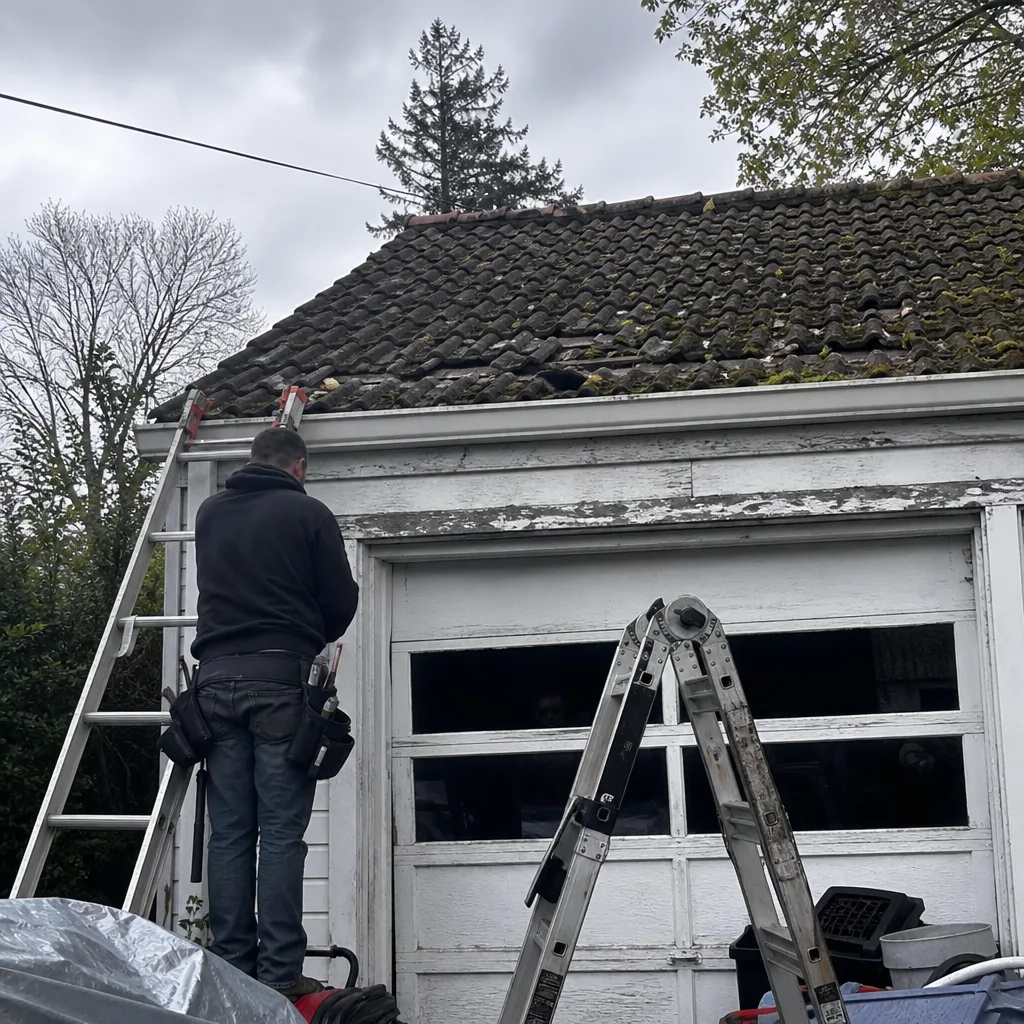 Before
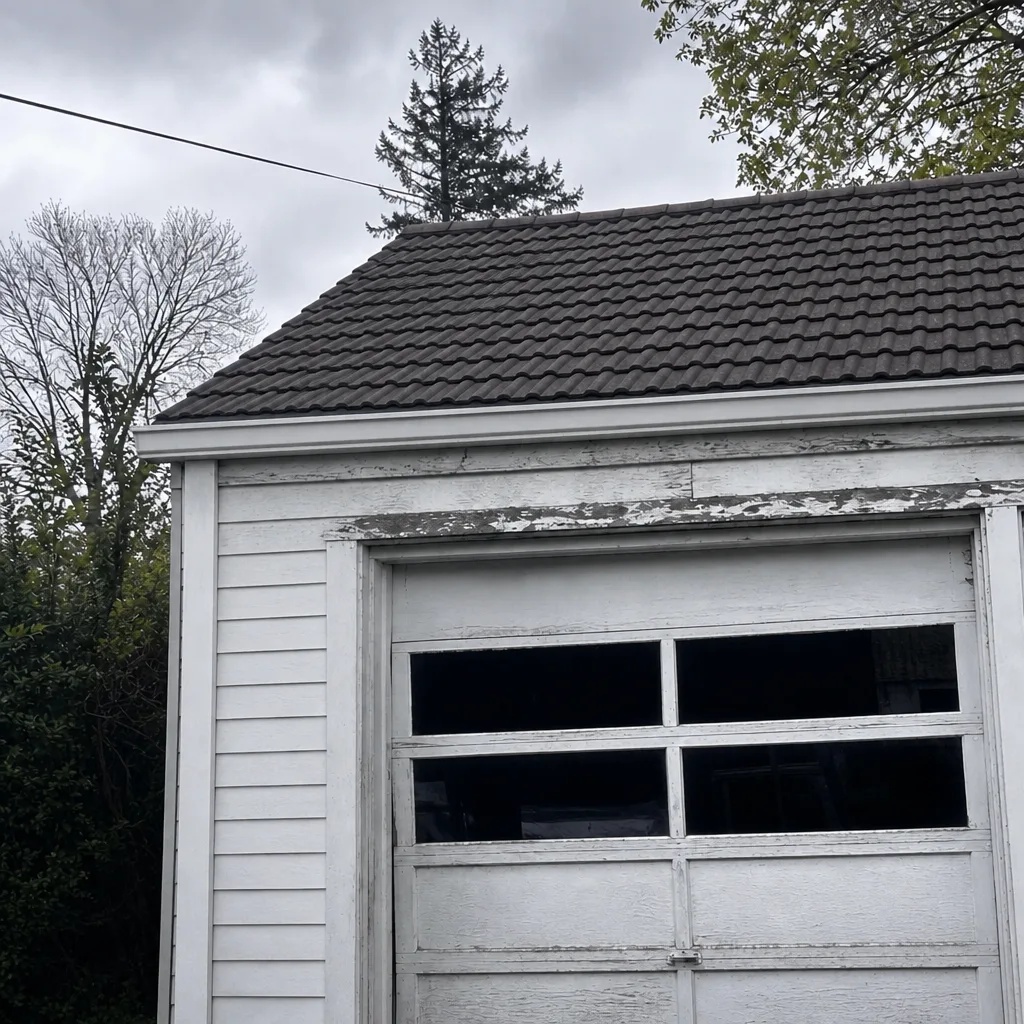 After
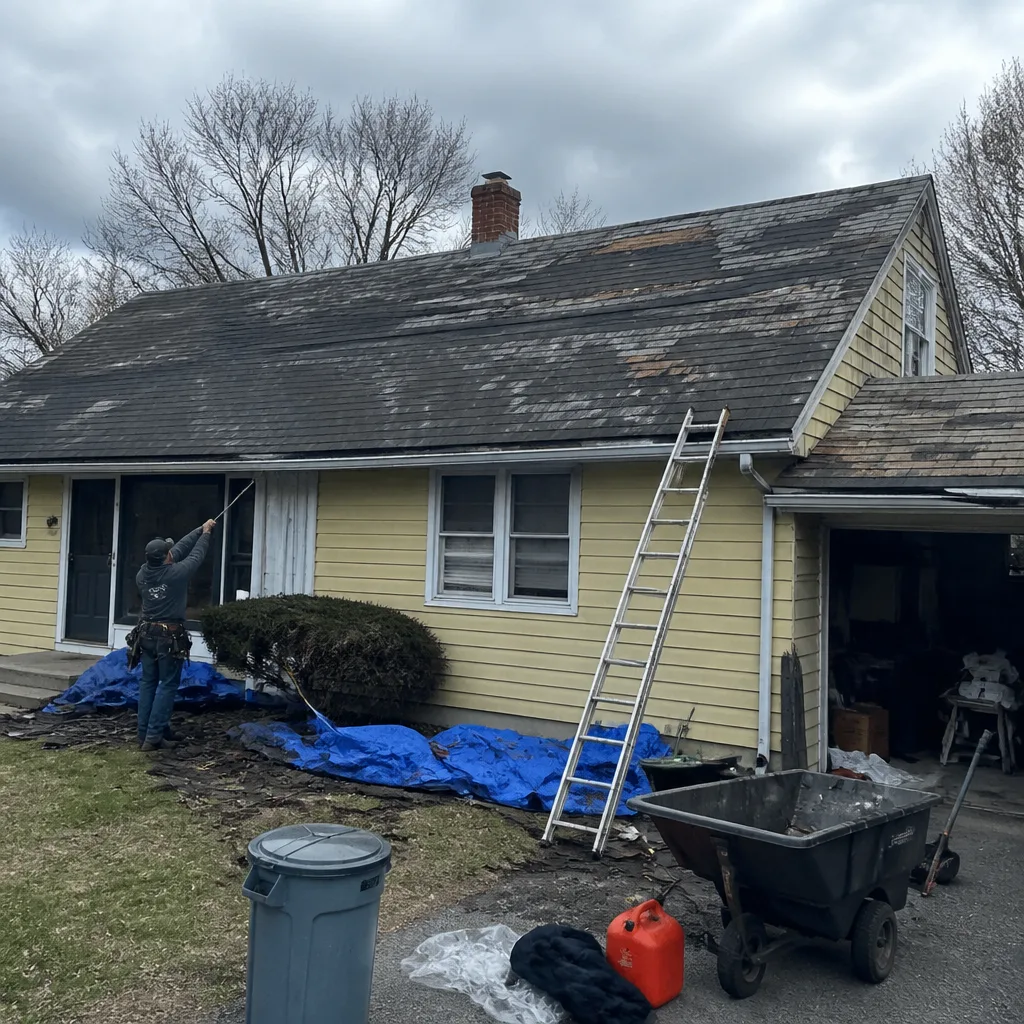 Before
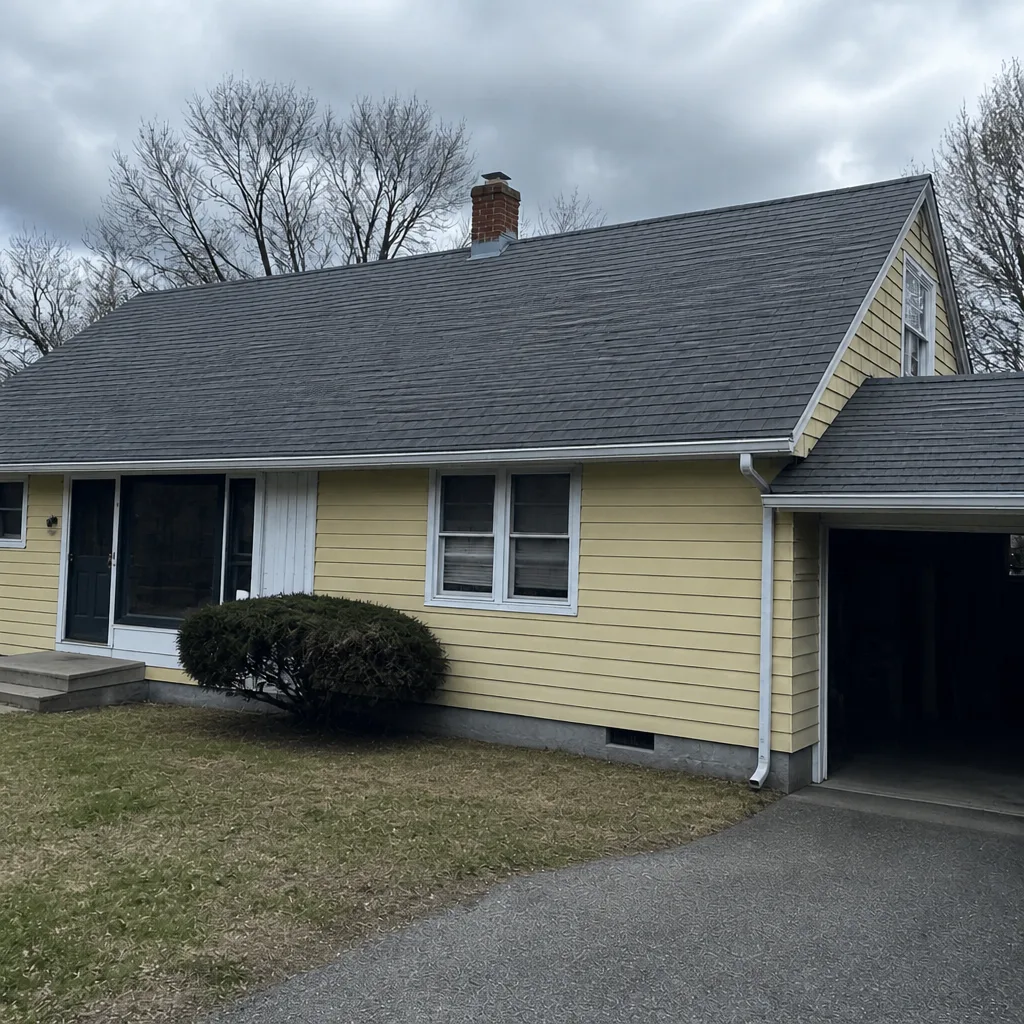 After
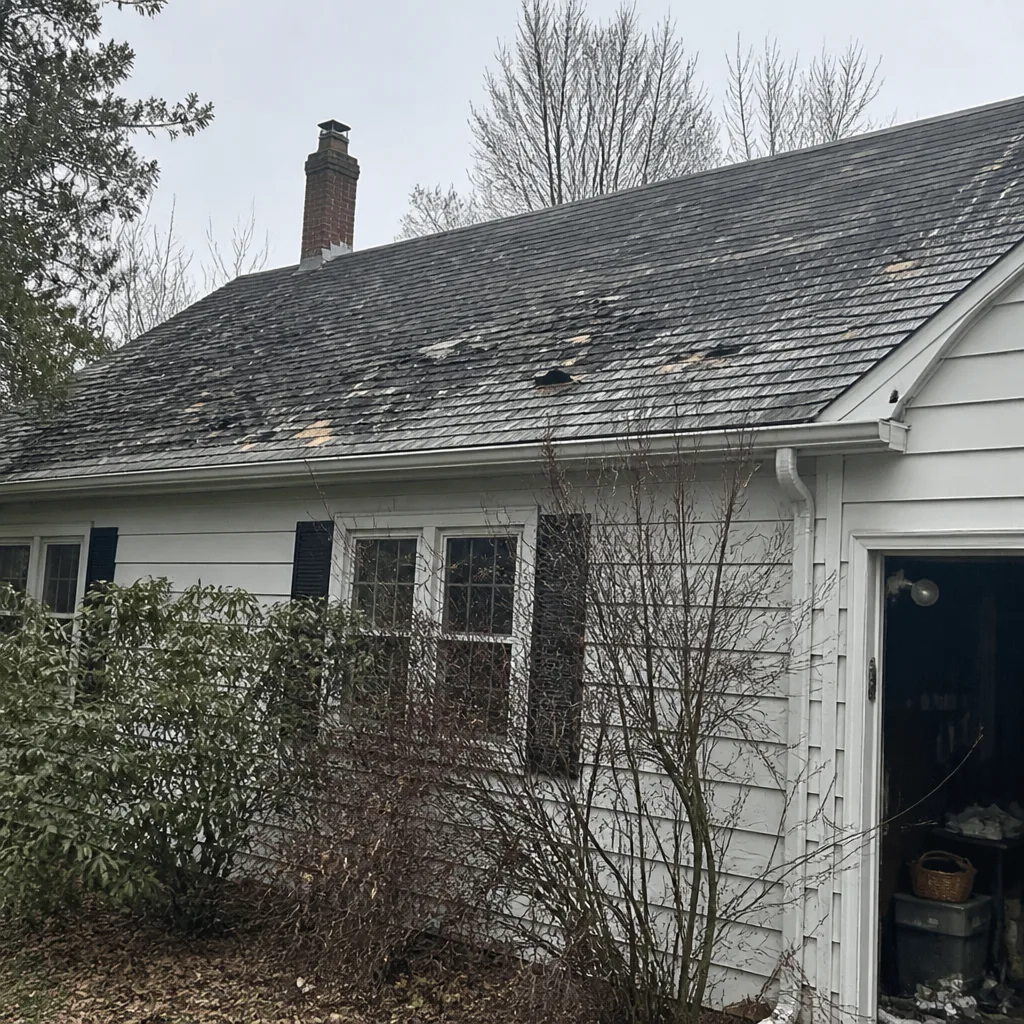 Before
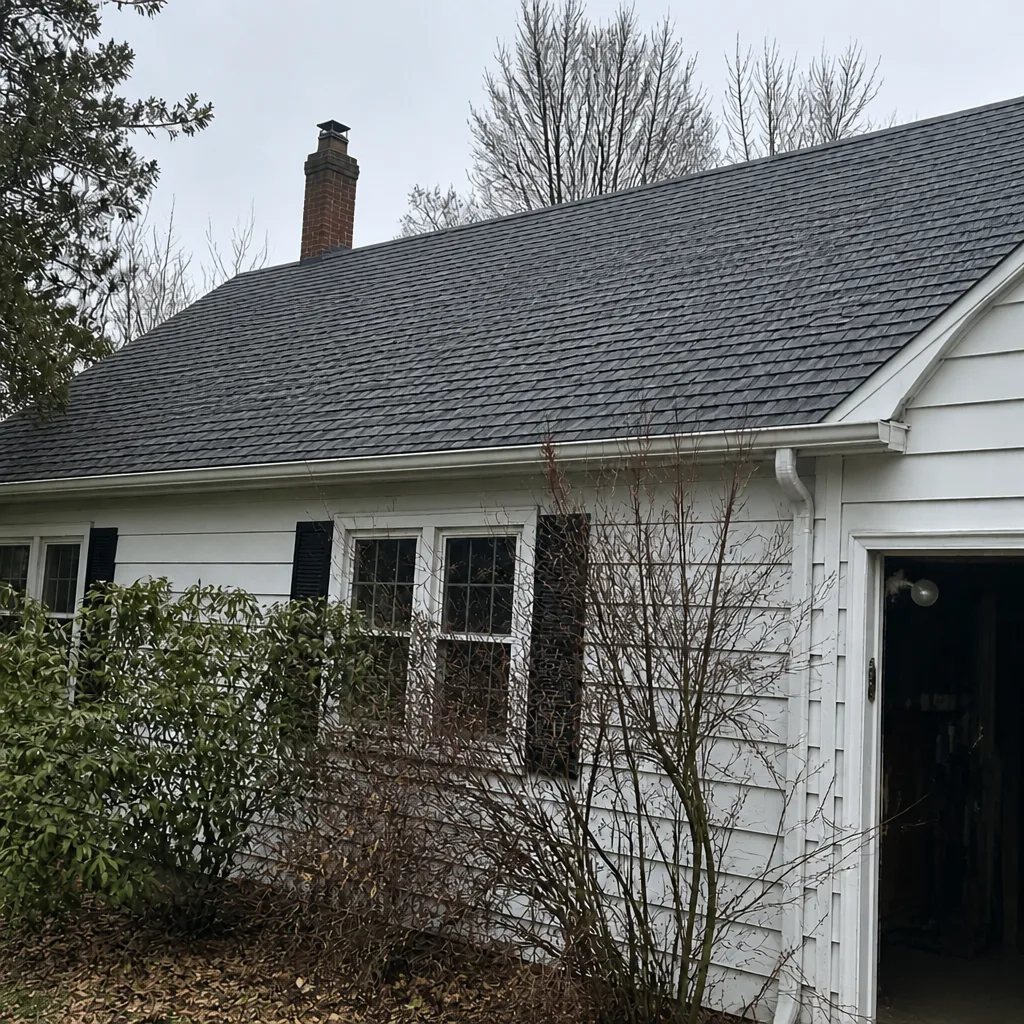 After
When to Call a Professional
Call a professional when any of these show up: an active leak, recurring leaks after a repair, sagging in the roofline, daylight visible through the attic sheathing, frost on the decking in winter, or granule loss at the downspout on a roof younger than 15 years. Also call after any major storm, after ice dams form, and before putting a house on the market if the roof hasn’t been inspected recently. Jasper Roof Repair offers free estimates in Albany. Call (855) 473-7282. We answer 24/7. Fast dispatch from 7am to 7pm, Sunday through Friday.
We’ve seen enough Albany roofs to know that the answer most homeowners need isn’t always “replace”. Sometimes it’s a targeted repair. Sometimes it’s a note to check again next spring. Roofing is all we do, and that focus is exactly why the read is worth calling for.
Frequently Asked Questions
Granule loss at the downspout outlets is the earliest reliable signal. Granules at the base of a downspout on a roof younger than 15 years show that the freeze-thaw cycle is breaking down the shingle surface faster than it would in a milder climate. Call (855) 473-7282 for a free estimate.
Albany’s freeze-thaw and UV exposure shorten the timeline compared with national averages. A shingle rated for a longer life elsewhere may lose flexibility or shed granules earlier here. The best way to know how much life your roof has left is an inspection; we can tell you the honest estimate. Estimates are free when you call (855) 473-7282.
Many roofs showing only early warning signs can be repaired. Localized damage, isolated leaks, and partial granule loss are usually repair candidates. Widespread cracking, sagging, or compromised decking mean replacement. An inspection makes the call. We offer inspections as a standalone service, with no obligation to buy. Call (855) 473-7282 to schedule yours.
Look for shingles lifted or flipped along the eave, granulation on the eave, bubbles or wrinkling mid-slope, and a horizontal water stain on the inside ceiling near the wall. If you see these after a winter in Albany, get an inspection while conditions are still damp. Call (855) 473-7282 for a free estimate.
Yes. Frost on the decking, dark staining on rafters, or daylight through the sheathing gives an inspector a head start and tells the story of the roof’s condition better than the exterior often can. A quick look is free and safe. The professional inside-out review is part of our inspection. Call (855) 473-7282.
You can safely check the attic and the ground-level areas. Reading flashing condition, deck integrity, and the patterns of ice dam damage requires getting onto the roof, and that’s dangerous. A trained roofer is the right call. Jasper Roof Repair works with materials from seven major manufacturers, including GAF, CertainTeed, and Tamko, so recommendations fit your roof, not a single brand. Call (855) 473-7282 for a free estimate.
The Bottom Line
The warning signs worth reading are the early ones. Granule loss at year 8, frost on the attic decking, staining on the rafters, cracked or lifted flashing around chimneys and dormers. Those signals give you time to choose between repair and replacement. Sagging, daylight through the sheathing, and widespread shingle cracking mean the deck is involved and the decision is made. If you live in Albany, the freeze-thaw cycle accelerates all of it, so checking early matters more here than the manufacturer’s brochure implies. Start with an inspection. Know exactly what you’re dealing with before spending a dollar on repair or replacement. Repair when the roof warrants it. Replace when it doesn’t. We’ll give you the straight answer either way. Call Jasper Roof Repair at (855) 473-7282 for a free estimate. We answer 24/7. Fast dispatch from 7am to 7pm, Sunday through Friday.
Written by the team at Jasper Roof Repair.